Blog /
What’s in an (Irish-American) Name?
March 13, 2022
The Irish in the United States of America or Irish Americans total 31.5m and far outnumber the Irish in Ireland. Their pride in their Irish identity knows no bounds and “Ireland” owes them a huge debt of gratitude. A small island of the west coast of Europe couldn’t hope or expect to have a global impact its had, however the Irish Americans in no small part have. Indeed, Irish independence in 1921 was attained with Irish-American support, both generational and financial.
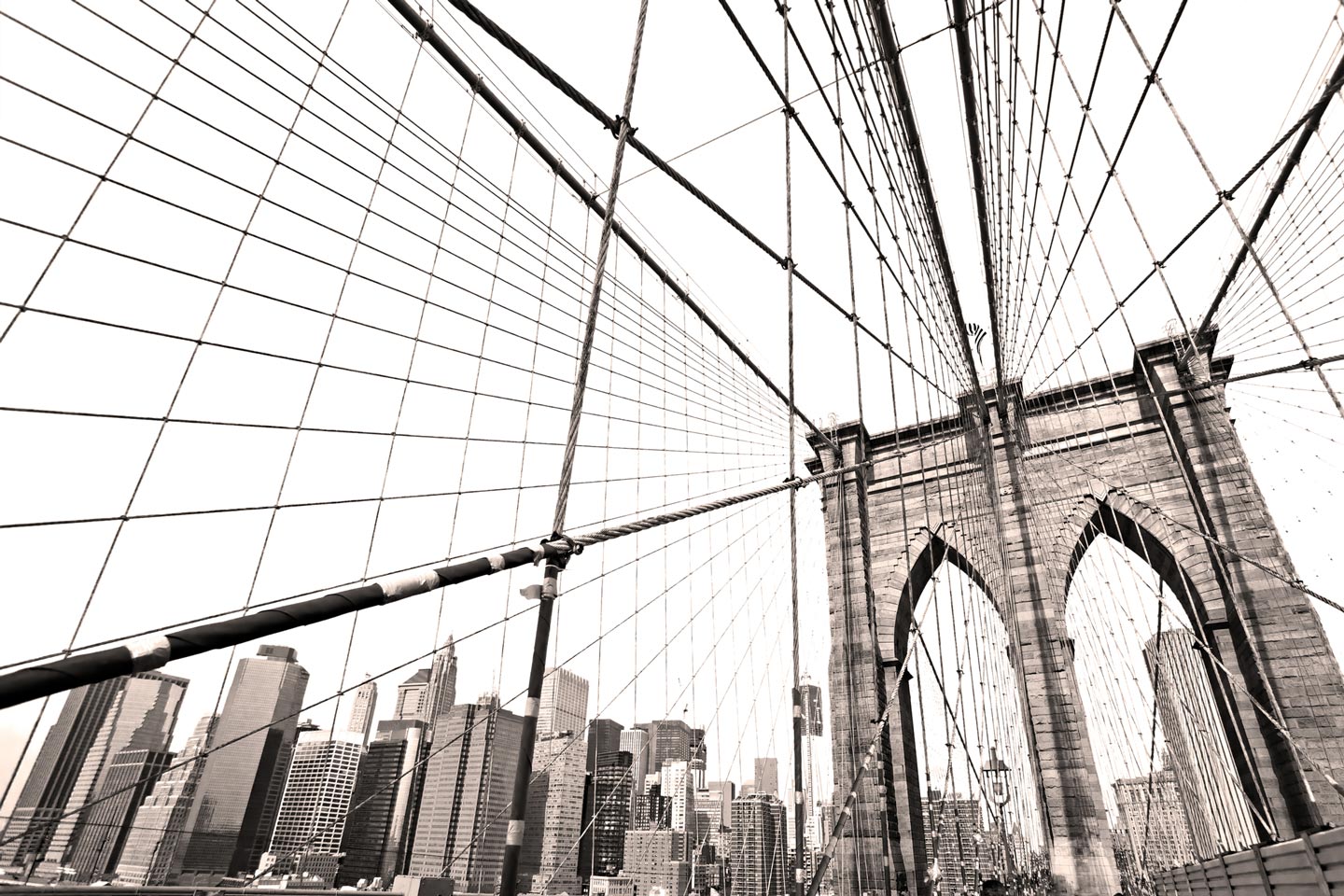
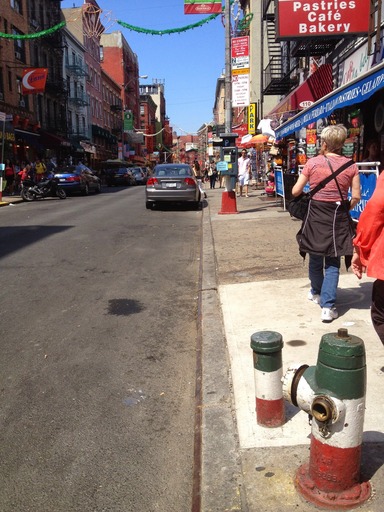
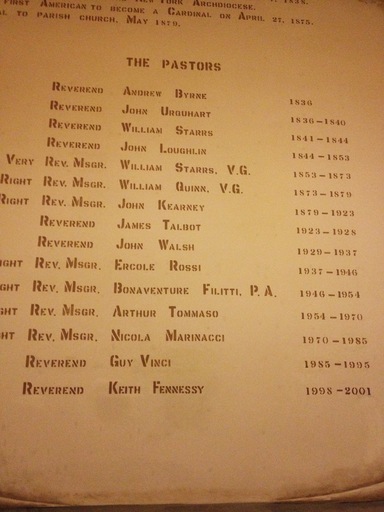
My personal experience of USA/NYC and the American Irish relates to my trip there in 2012. I was always interested to learn what I could about their experiences there, good, bad and indifferent. To this day, one of the best guided tour I ever took was with James Nevius @WalkNYC.com, I had him all to myself! I always have to hold back my questions on tours but not on this one – it was a full-on discussion of the Irish in New York. I still vividly remember when James told me how little Italy was actually “little Ireland”, just before the Italians arrived. Old St. Patricks church in lower Manhattan looked like such an insecure and fragile building with high defensive walls; perfectly representing the Irish Catholic mindset at the time – the Immigrants. I saw inside the cathedral, that almost over night, the Irish priests names suddenly became Italian names. Only 60 years later the Irish went uptown and built the spectacularly imposing St.Patricks on 5th Avenue, if ever a building signaled the arrival & confidence of its people.
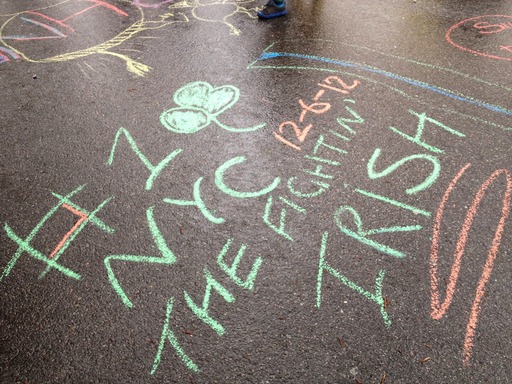
On that same NY trip I met with Johnnie Burke, an old team mate, who invited me to his Queens neighborhood pub (The Irish Rover) for the Irish World Cup soccer
game (a good hiding). There I got talking to the Irish American patrons, my Irish accent ensured I heard many stories of the auld country, their connections and how they were making it in NYC. Some there years, probably never leaving while others just passing through. However true about all of them, I felt it – you’re never more Irish than when you’re out of Ireland. I believe Irish-Americans feel that all their lives, through their families, their parents and grandparents.
The history
In America, Irish names such as Murphy, O’Sullivan, Doyle and McCarthy – the list is endless are everywhere. These Irish clan names, some incredibly powerful up to the fall of the Gaelic native era (1603) were present in Ireland for centuries and Millenia. The many Castle ruins are testament to their contribution to Irish history and heritage. The “O” and “Mac” meaning son of came into use around the 10th Century. While the suffix “Mor” meaning great/leader was the head of the clan, ie McCarthy Mor held the title and was head of his clan. The anglicilsed version would be a title like “the O’Neill”for the great garlic clan leader Hugh O’Neill.
The Immigration
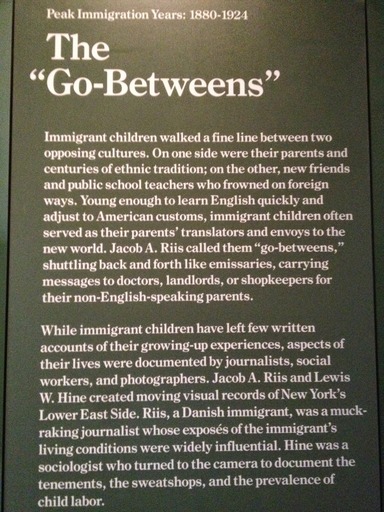
It was only decades after the Great Famine / Hunger “An Gorta Mor” 1843-1849 that the Irish speaking their native gaelic language (not English) had to, if lucky enough, emigrate to the promised land. A land free from oppression, leaving the old ways and their family to embrace the possibility that their life/death decision meant that if they made it, their future family might have a life/opportunities they could only dream of back in Ireland.
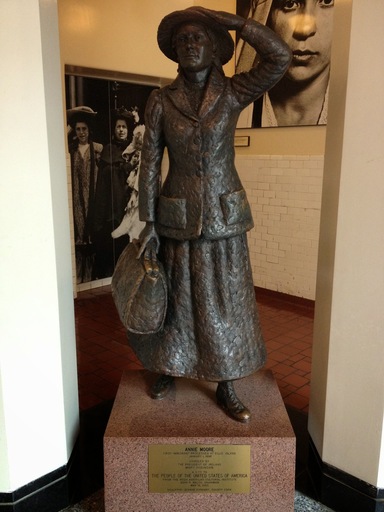
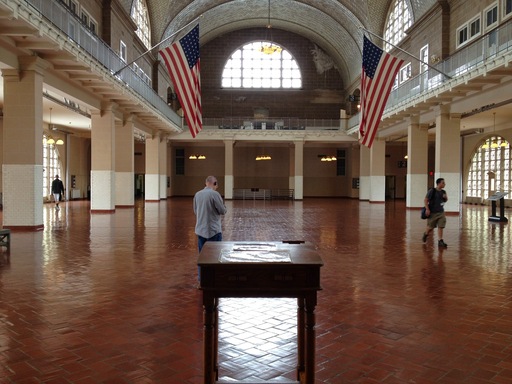
Over in the USA, Ellis Island was the main USA immigration centre. For some 12 million immigrants it was where they first stepped foot on US soil. The first of which was a young Annie Moore, from Ireland, in 1892. Ellis Island made a massive impression on me.
For the Irish arriving in great numbers, life couldn’t have been tougher, you made it anyway you could. Many didn’t. For those that did, they integrated themselves into American life as much as they could. For example they played a huge part in the American Civil war, far beyond the famous fighting Irish 69th. As the 19th century progressed they became more of a factor in American life but they never forgot the old land. Men like Jerimah O’Donovan Rossa and movements like the Fenians lent tremendously political and financial support back home to Ireland’s struggle for freedom. Jerimah O’Donovan Rossa came back to Ireland to be buried and Padraig Pearse read the now infamous speech over his graveside, ending with the immortal lines.
“They think that they have pacified Ireland. They think that they have purchased half of us and intimidated the other half. They think that they have foreseen everything, think that they have provided against everything; but the fools, the fools, the fools! – they have left us our Fenian dead, and while Ireland holds these graves, Ireland unfree shall never be at peace
Once Upon A Kingdom © 2026 All Rights Reserved